Every parent wants more than just a daycare; they need a second home for their little ones. Selecting a day care is a significant decision. The kids will also spend most of their day in a daycare center learning, playing, and doing activities with their fellow kids.
Therefore, you will need to provide a healthy, supportive environment that enhances healthy development. The right questions will give you a well-informed decision to make.
This blog will guide you with questions to ask at daycare. These questions make your child feel good, comfortable, and eager to explore new things and provide you with peace of mind.
1. What Is Your Staff-to-Child Ratio?
The child-to-staff ratio describes the number of children a teacher has responsibility for. Small class sizes give the teachers the benefit of spending more time and giving attention to the kids. For instance:
Infants: 1 teacher to 3-4 babies
Toddlers: 1 teacher to 6 kids
Preschools: 1 teacher to 10 children
Question how they maintain this ratio throughout the day and during outdoor play.
The ratio must be good so that the kids get the support, care, and attention they need. The teachers can observe the learning experiences, behavioral changes, and individual needs. It makes children feel safe, cared about, and confident.
2. What Training Do Staff Members Have?
The staff training and experience at the daycare are greatly important.
- Ask if teachers took early childhood education courses.
- Verify their Certifications in first-aid and CPR.
- Also, check whether they have regular training in child safety and learning development.
- Professionally trained employees will allow children to develop, deal with emergencies without panic, and spend time with them individually.
Trained teachers develop socialization in the little ones. It is important to select well-trained staff so that your child will be safe, happy, and learning in a good place.
3. How Do You Keep Children Safe?
The priority should be safety. Inquire about closed doors, visitor check-in, and playtime monitors. Also investigate fire drills and emergency procedures, as well as first-aid readiness.
A daycare with good safety regulations allows children to play and discover. It also assures the parents that their child is safe. Good safety measures make the children safe while they learn.
Learning these rules shows the commitment of the daycare to providing all the children with a safe and well-cared-for day.
4. What Is the Daily Schedule Like?
A proper daily routine makes children feel safe and learn.
- Ask about the structure of the day, about activity and play, meals, and sleep.
- Check if the curriculum is based on early childhood education programs and plans.
- Ensure that arts, music, and outdoor play are allowed.
A well-balanced itinerary makes the children aware of what is meant to happen, relieving stress. It also lets them learn new skills, play, and take a rest when necessary. A structured schedule makes the day fun, educational, and easy to comprehend for little ones.
5. How Do You Handle Behavior and Discipline?
Sometimes children cross the boundaries. See how the daycare is managing behavior.
Are positive reinforcement or gentle reminders used by teachers? How are disputes or conflicts settled? Do you know that the children with special behavioral needs are accommodated?
Such simple things as respect, patience, and self-control will be taught through a calm and constant manner. Children acquire rules without fear and understand that they are secure to make mistakes.
Understanding how behavior is directed means your child will be in an enabling environment where learning and desirable behavior are promoted to enable him to mature, both socially and emotionally.
6. What Are the Health and Food Policies?
For kids’ growth and development, good food and hygiene are important. Check that the day care offers healthy snacks and meals. Look at how they treat allergies and special diets. Moreover, check on handwashing habits and procedures with sick children.
A clean, healthy daycare reduces unhealthiness and keeps children healthy and strong.
Healthy foods provide energy to play and to learn. Children learn positive hygiene habits in the daycare that ensure they remain healthy throughout their lives. The right policies in food and hygiene make your child able to explore and enjoy his or her everyday life in a safe environment.
7. What is the Way of Talking to Parents?
Daycare communication with parents is highly important. Questions to ask:
- How does the center provide updates on your child?
- Do they report every day or weekly? Are there parent-teacher conferences?
- What do they do about parent concerns?
Effective Communication also helps parents to keep track of the growth, learning, and behavior of the child. It enhances the cooperation between the parents and the teachers to help the little ones. Children become confident and supported when they fully understand communication. Parents find it very satisfactory to know just what their kids are doing the whole day.
8. What Is the Process of Daycare Enrollment?
Knowledge of the daycare enrollment process leads the parents and children to adapt to a new environment easily and quickly.
- Request the documents that will be required, including the medical records and emergency contacts.
- See whether the trial days or the orientation session is possible.
- Get to know tuition, fees, and waitlists.
Learning about the procedure beforehand reduces some stress associated with initially going to daycare.
Easy guidelines of enrollment imply that the center is systematic and will be willing to receive new children. It may also assist your child in getting into a new place without any problem, and they can feel at home on the first day.
9. What Do You Educate Children?
Good daycares are fun to learn in.
- Find out how they impart the art of speaking, thinking, and movement.
- Examine how they promote group work, sharing, and socializing.
- Inquire about the support provided to children with delayed learning.
Early childhood education programs are curriculum-based, where kids are ready to have a strong school performance. Confidence is built by curiosity and creative-making activities. A learning-oriented daycare would provide them with an opportunity to live a joyful social, emotional, and academic life.
10. Are You Able to Get References or Reviews?
The feedback of other parents would help understand the daycare.
- Get references from current or past families.
- Search on the web for reviews or testimonials.
- Find out about instructors, structures, and the way in which children are treated.
- By going to the daycare and speaking to parents, they can get a practical look at everyday life.
- The opinions of other families provide parents with a better decision.
Other reviews and references make strong and weak points you might otherwise miss. This will also aid in making your child feel safe, happy, and cared for.
Why Parents Depend on Growing Seed Academy to Take Care of Their Child
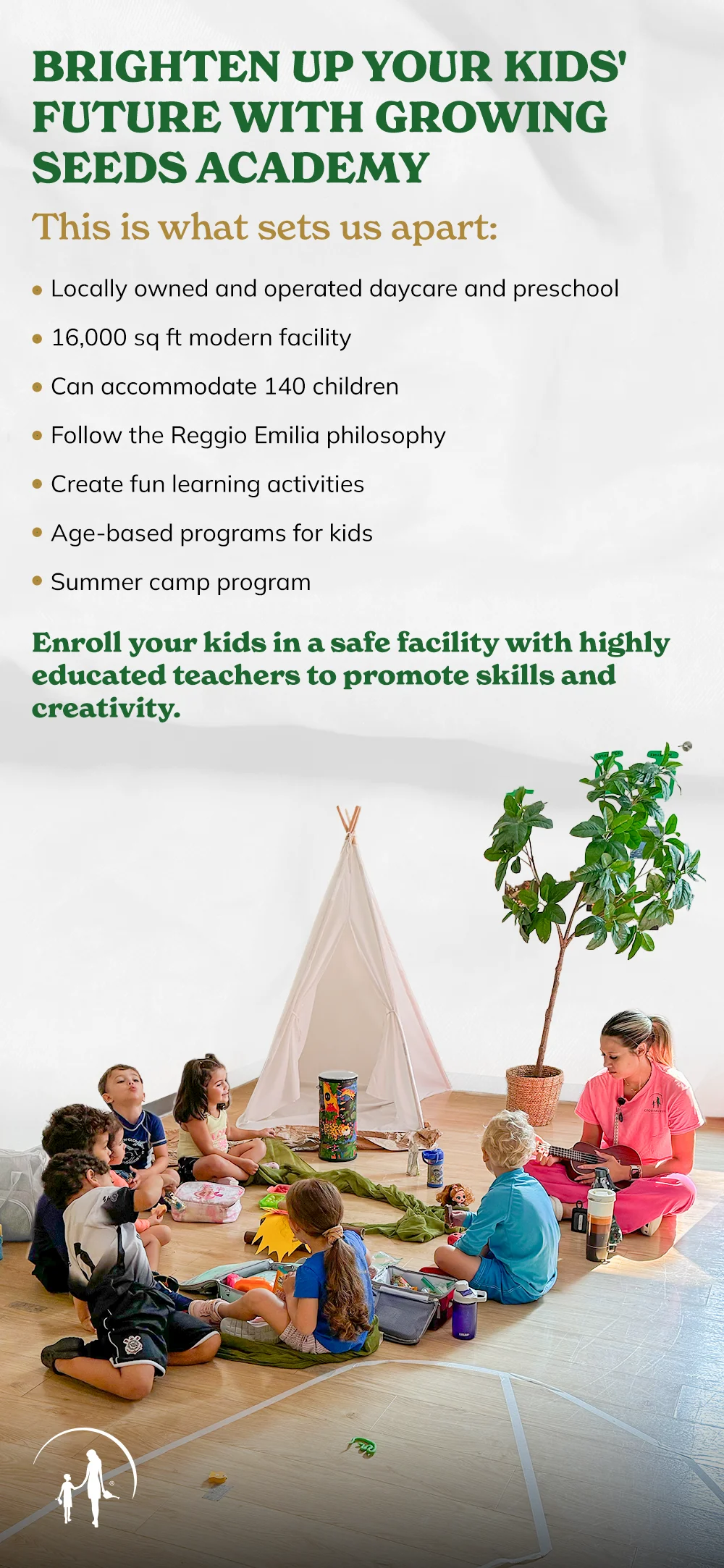
Growing Seed Academy knows how important your child is to you, and we treat them that way, like they are our very own. Each day, we meet every child with enthusiasm and welcome, making it a place where they find comfort, affection, and esteem.
Our small group strategy enables us to see every smile, answer every question, and cherish every milestone. Our well-educated teachers take children through fun learning, imaginative projects, and soft routines to develop curiosity and confidence.
Parents rely on us due to the fact we provide more than childcare; we provide a second home for their child. The room is filled with giggles of your child, their imagination is being broadened, and they are in the right place. We raise smiling, self-assured tiny individuals.
Conclusion
Seeking the right daycare may be a big step, and it is. We have shared some good daycare questions that can help find a suitable center where a child feels comfortable, encouraged, and eager to learn more about things.
Take your time in the process, visit daycares in person, observe how things are handled, and speak freely with the staff. An excellent daycare will also be willing to answer all of your questions.
As soon as you get into the right daycare facility like Growing Seeds Academy, you will have peace of mind and also be assured that your baby is in good hands every day.
Frequently Asked Questions
1. What are good questions to ask a daycare before enrollment?
Some major questions you should ask are related to the qualification of the staff, safety measures, the daily routine, discipline, health policy, and communications.
2. When do I need to begin enrolling in the daycare?
It is highly recommended that you start the enrollment process 3-6 months ahead of time, as not all daycares have space, and some of them have a waiting list.
3. How frequently will I get updates about my child?
Most centers update parents daily on reports, conduct parent-teacher meetings regularly, or update them through digital applications.