As toddlers grow, parents start thinking about their preschool education. This is one of the most important and challenging decisions in life.
Preschool is the foundation of a child’s future learning and life skills. It’s more crucial than most parents think. Preschool is not solely focused on teaching reading and maths.
A good preschool teaches kids essential life skills that support them in school and life. At an early age, developing these skills is vital. Life skills help children to flourish academically in school and later in life.
We hope to show you the seven most essential life skills your child will develop at a good preschool.
1. Social Skills
Preschool is the first opportunity for kids to learn and develop social skills. It is the first time they know how to share and work cooperatively. They can even try to manage different types of issues.
We believe in helping children learn practical social skills. We support children in learning social skills through group activities and play. This exposure to practical situations will develop empathy in children. We work on emotional intelligence and the ability to communicate through many skills, such as listening, speaking, and even making friends.
All children should:
- Share toys and other resources
- Take turns in group activities
- Express emotions
- Cooperate with fellows
National Institute for Early Education Research NIEER shows that children with quality preschool education have comparatively better social skills in kindergarten and following grades.
2. Emotional Regulation
Preschool is the best place for kids to learn emotional regulation. It is one of the most valuable skills in any stage of life. Children learn to identify emotions. They learn how to deal with them.
We know how to help children express emotions. They talk openly about emotions, including happiness, sadness, anger, and excitement. Children learn to calm down through self-regulation techniques. Your child learn about deep breathing or counting to ten. These short steps are highly regarded for emotional control.
After completing preschool, children can do the following:
- Recognize feelings
- Implement coping mechanisms when feeling down
- Know that feelings are temporary
- Self-inflate confidence through emotions
3. Problem-Solving Skills
A quality preschool pays attention to kids’ logical and independent thinking skills. Here, kids make a tower out of blocks or do a puzzle. These are not merely playing activities. They develop logical thinking skills. We can plan out a mini-lesson while organizing the class activities.
Preschoolers love to explore a variety of solutions and learn from failures. They are super curious about little things around them. The process of trial and error increases their confidence in problem-solving skills.
Here are some problem-solving skills your child will develop;
- Recognize a problem
- Plan solutions
- Make each plan a reality
- Learn willingness to fail and improve
4. Independence
Preschool teaches self-independence. They will select activities, put on shoes, and even tidy up their playing area. They have multiple options to choose from.
Children learn to care for themselves and make choices from these little tasks. Gradually, they become more self-reliant. Kids build their self-esteem from new skills.
At Growing Seeds Academy, we set up a caring environment to support children’s independence. We support self-efficient learners by arranging independent self-care tasks.
By the end of preschool, children can:
- Complete simple tasks independently
- Clean and organize
- Self-select from their list of daily activities
- Ask for help when appropriate
5. Communication Skills
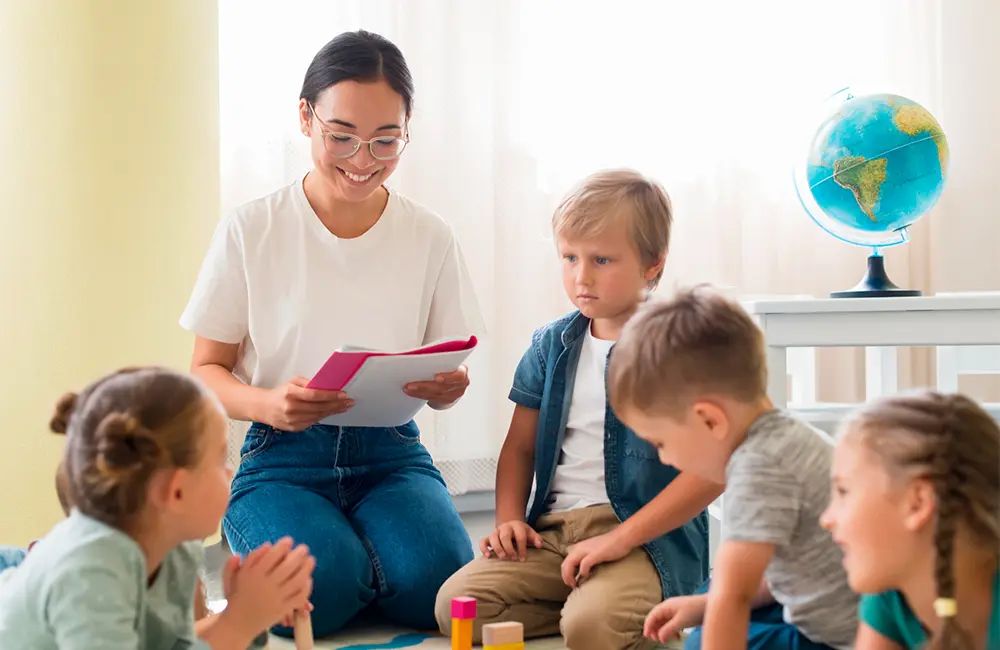
At this age, most children start developing some communication skills. They can communicate their thoughts and opinions to others. This is a new and exciting venture for them. Kids should learn to value and practice listening skills. It is also a new skill to grasp.
Preschools have a specific routine that covers story time, playtime, eating time, and group discussions. All these activities support children in appropriate communication with their peers. Early education programs that pay attention to communication skills will positively influence children’s academic achievement in the years to come.
When it comes to preschool lessons, students can:
- Express personal needs and thoughts using language
- Listen attentively to other people
- Follow basic verbal directions
- Take part in simple dialogues with other kids and with grown-ups
6. Motor Skills
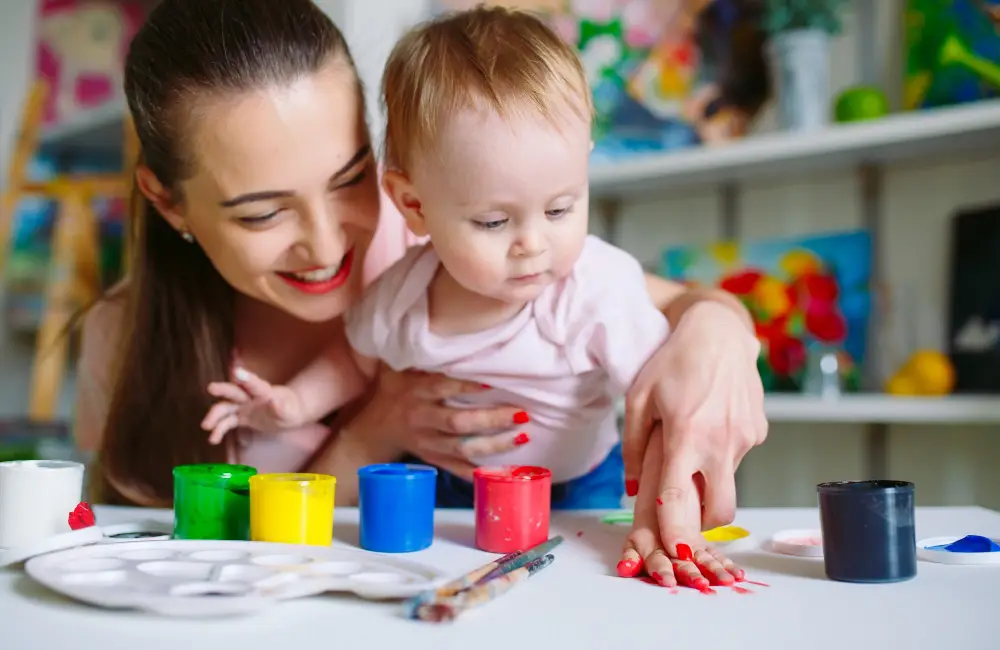
This is a critical stage for learning gross and fine motor skills. Fine motor skills are connected with small objects, including drawing and cutting. Gross motor skills involve larger movements, like running and jumping.
We are careful to offer children a mix of activities that include arts and crafts as well as physical play. We include dancing and running games as well. Kids enjoy the plethora of health benefits. Plus, these activities support the development of coordination and balance.
When leaving preschool, kids will have better:
- Hand-eye coordination
- Fine motor skills like writing and cutting
- Physical fitness and coordination
- Gross motor skills like running and jumping
7. Time Management
Time management can be taught even at a very young age. In preschool, children are exposed to simple routines that mark the beginning of understanding time. They learn when to play, eat, and rest, and so can order their day.
Children get a sense of routine. This way, they can understand the concept of time. They will learn to manage it. With the help of their teachers, children learn to follow a schedule. It teaches them time management and discipline.
Kids can complete the tasks below by the end of preschool:
- Maintain a daily schedule with very few prompts
- Grasp basic concepts of time like “before” and “after”
- Shift from one activity to another without hassle
- Complete a few small tasks within a reasonable time
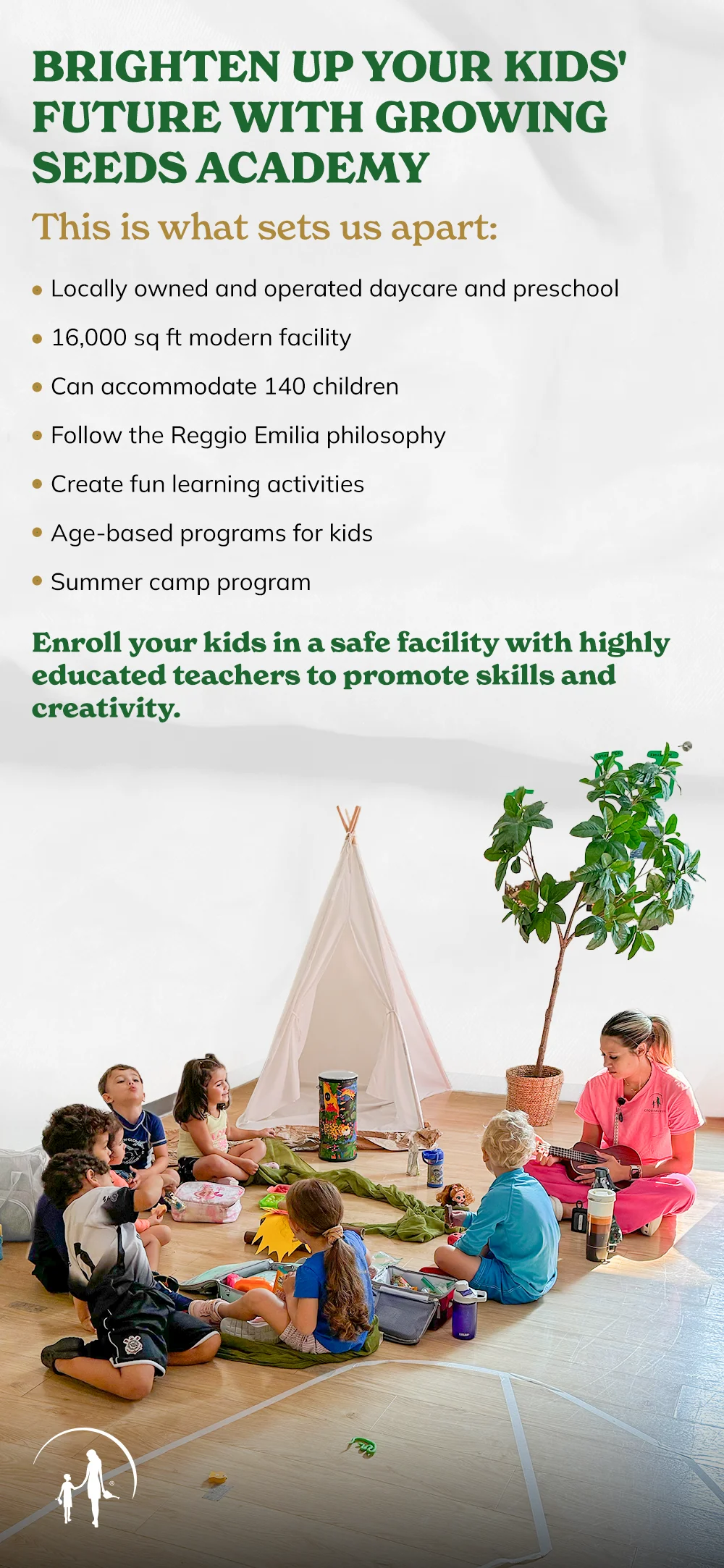
Why Opt for Growing Seeds Academy?
Growing Seeds Academy guarantees that your child will get the best care. We support their growth. Your child will develop skills to tackle the future without any hurdles. Our qualified staff helps children learn the essential skills.
These skills empower them through life during critical moments. The child gets a safe and caring environment that is full of opportunities. It supports their healthy social, emotional, and intellectual development.
Growing Seeds Academy gives your child a perfect head start on their schooling. We offer a preschool program to improve your child’s health and confidence. Enroll your child at Growing Seeds Academy today!
Frequently Asked Questions (FAQs)
1. Which life skills does a child learn in preschool?
Social interaction, emotional regulation, language skills, problem-solving, self-reliance, creativity, and collaboration are some life skills preschool children will learn.
2. How does preschool facilitate social skills development?
Children have the opportunity to interact with their peers of the same age. They are taught during play and group activities to communicate and collaborate with one another. They will make friends and handle social situations.
3. How do preschool programs aid emotional development?
Preschool programs assist children in dealing with their emotions. Your kids will be better equipped to manage frustrations and avoid tantrums. The teachers explain to children how to express feelings using words which is more appropriate. We teach calming and self-soothing techniques.