Infant learning in the early years of life is essential. Infants grow fast, and they get to learn the world from every sound, color, and touch. Playing and small tasks are not only games, but they also support infants’ skills, intellect, and language development.
Easy infant learning activities can help parents and caregivers educate during playtime. Basic elements such as music, colors, and simple toys can aid the development of the brain and body. Such moments also render learning joyful and natural. This blog will present 10 fun infant learning activities to enhance the early development of infants.
1. Tummy Time
One of the most appropriate activities for infant learning is tummy time. Put your baby on his stomach for a few minutes a day. It assists in the development of neck and back muscles, which later enable sitting and crawling. Place toys in front of them to encourage reaching. Not only is this micro routine fun, but it teaches motor skills, too.
2. Peek-a-Boo
It may appear to be just a silly game. But this activity is teaching very important early lessons. They learn that people can return by covering and uncovering their faces.
This is also an activity that can be helpful for developing social-emotional skills.
Babies learn that the face in the mirror is their own. It teaches babies to know about memory and trust. They laugh at this fun activity, feel closer to you, and train their initial social skills as well. Interaction with simple games can aid bonding and cognitive development.
3. Finger Painting
Infant finger painting is a creative activity. With safe, washable paints, allow babies to dip their hands in colors. They appreciate texture and bright outcomes. It enhances the strength of the hands and fine motor abilities. Babies can learn about shapes and patterns and explore their creativity through finger painting as well. This kind of messy play develops initial problem-solving abilities and triggers imagination among small learners.
4. Stacking Toys
Motor skill activities are really good as stacking toys and blocks. Infants learn to make use of their hands, eyes, and fingers. They learn problem-solving and balance when they try to put one block on top of another. Stacking is also fun, as they love knocking them down. The activity is a lesson of cause and effect, as well as the development of fine motor skills to master new abilities.
5. Crawling Games
Crawling games are interactive, and they enhance strength. You may set pillows or the tunnels of fluffy materials on the floor. Infants crawl on them, and this enhances balance, speed, and confidence. This form of play is not just fun, but also an excellent educational activity for one-year-olds. It develops an ability to solve problems because they are taught how to navigate between objects.
6. Mirror Play
Infants adore mirrors as they observe new faces, including their own. They observe the mirror reflection imitating them when they are moving or even smiling. This is a good task to promote social and emotional skills. Babies will learn that the face in the mirror is their own.. Mirror play develops curiosity, happiness, and self. It is a secure and enjoyable exploration method.
7. Sorting Toys by Color
Provide your baby with colored blocks or toys and demonstrate the grouping according to color. Start with two simple colors like red and blue. It is a powerful cognitive developmental activity to teach because sorting teaches focus, comparison, and solving simple problems.
Infants are not yet likely to sort accurately, but after a time, they get better. As the baby plays, parents can label each color. Such an easy activity also enhances hand-eye coordination.
Sorting activities introduce babies to an early knowledge of math and make play thrilling. It is a little yet mighty method of enhancing learning.
8. Hand Puppet Play
General stories or song stories can be told using simple hand puppets. Touch your baby, use comical voices, and move the puppet. Puppet play sparks imagination and makes babies laugh while learning.
A great infant learning activity builds attention span, listening skills, and social interaction. We can practice emotions by holding a happy (or sad or surprised) puppet face.
The babies love seeing actions and puppets, which makes education entertaining. The fun and safe activity develops both emotional and language development.
9. Water Play
Put some warm water in a shallow pan and put floating toys in it. Allow your baby to touch, watch, and splash with the toys. The activity promotes hand coordination and offers cause-and-effect learning.
It is among the most fun infant learning activities as it combines play and exploration. You may teach simple words such as wet, splash, or float. Always observe to make sure that your baby is safe. Playing in water brings happiness and promotes sensory and motor growth naturally.
10. Sensory Baskets
Put a small basket full of safe objects around the house with varied textures, shapes, and sizes. Let your baby touch, hold, and explore them. They may include wooden spoons, soft cloths, or even plastic cups.
It is among the top activities for infants to learn about the world by using their senses. It creates interest, enhances perception, and reinforces brain growth. Keep your baby under supervision during this time.
11. Storytime with Pictures
Read books with bright pictures, simple words, and clear shapes. Point to things, colors, and animals. Then trace the word with your finger. Babies love your voice, and the spoken word raises awareness skills for concentration. It’s one of the easiest toddler activities.
This is one of the simplest educational activities for one-year-olds. This helps your 1-year-old to develop vocabulary as they connect pictures with sounds. Even 10 minutes a day can go a long way in their learning process.
Simple Infant Learning at Growing Seeds Academy
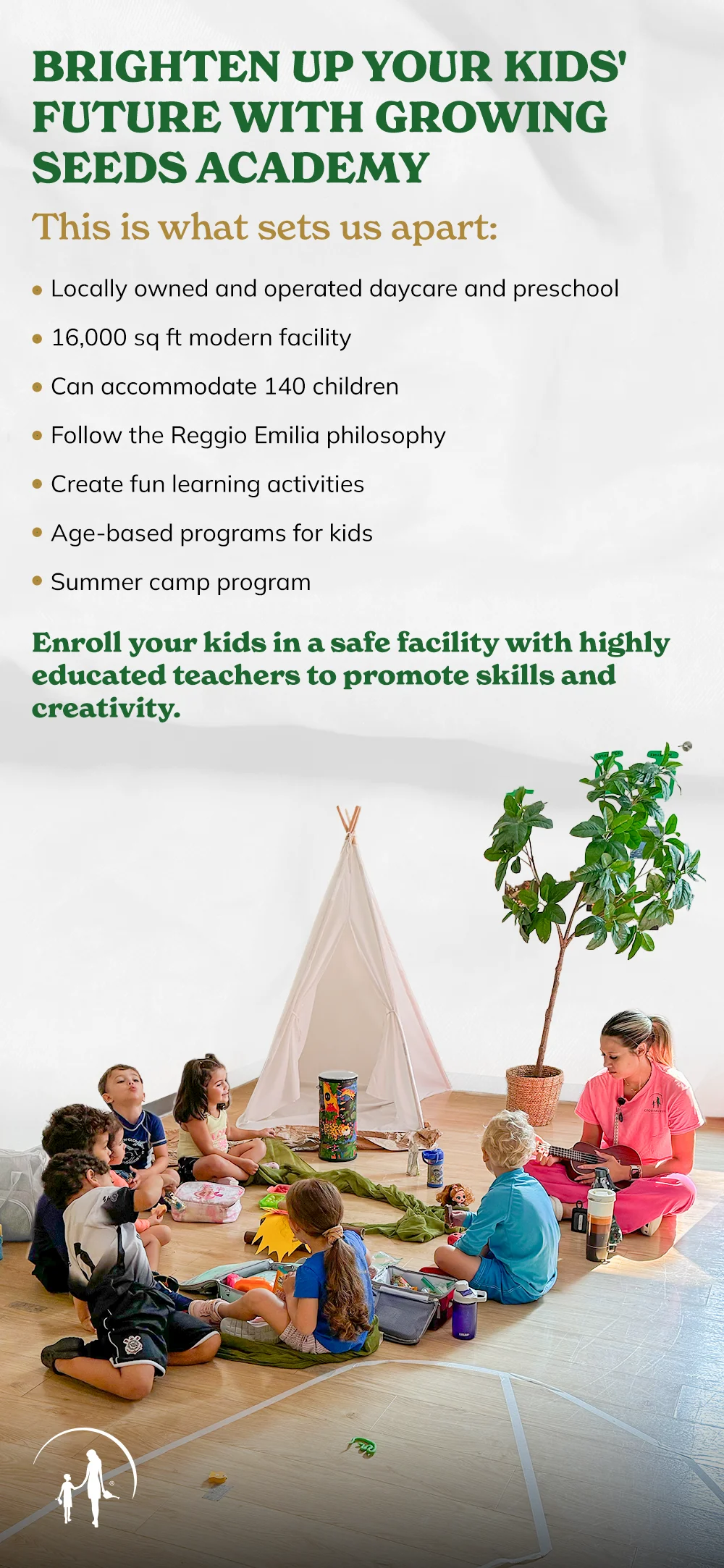
At Growing Seeds Academy, we deal with babies between 6 weeks to one year old. Our infant learning program provides every infant with a secure and joyful home to develop. Our trained teachers go through the daily routine with your baby and provide loving, individual attention.
We build early skills through the use of songs, play, and movement. Infants learn and discover at a pace familiar to them. You always know that your child is safe, loved, and supported, as we provide daily updates.
Conclusion
Children learn best when they perceive it as play. Infants do not require intensive education or highly expensive toys. Easy activities improve thinking, motor skills, and language development. Infants also learn how to be inquisitive, curious, and connect with parents through play.
These fun activities, conducted daily, help physical, emotional, and mental development. These infant learning activities can be done during your daily schedule. It will give your baby a foundation to support their future learning.
Frequently Asked Questions
1. How do sensory games work for my baby’s learning?
Seeing, touching, and listening to various things establishes brain power. Simple sensory games give babies some simple ideas about colors, sounds, and textures.
2. How can music and songs help infant learning?
Through songs and music, babies learn words, rhythm, and memory, and singing fosters good relationships and contributes to playful learning.
3. What role does caregiver interaction play in infant learning?
Caretakers assist infants in learning through speaking, playing, and interacting, and stronger communication enhances trust, love, and helps at all ages.
4. When should I begin infant learning?
You can begin with simple interactions as early as birth by talking, singing, and tummy time. The activities become increasingly interesting as your baby matures.