Key Points
- Peer interaction in daycare develops strong communication skills.
- Children share feelings, which grows emotional intelligence.
- Kids learn teamwork through group play and other activities.
- Daycare can increase confidence and independence.
Introduction
Young children change so much in their early years. Their brains and hearts soak up new information daily. Daycare is a huge piece of that growth. It’s much more than a place for care.
Daycare centers are a social hub. This is a suitable place where your little ones can make friends. They will exchange ideas. It supports peer learning in early childhood. Kids interact with their peers, and this supports their development. These abilities form the basis of their success in school and beyond.
Benefits of Peer Interaction in Daycare
Daycare provides kids with an opportunity to play and learn with other kids. Every little social interaction is a step in the right direction. Interaction with peers has multiple benefits for your child.
1. Better Communication Skills
Kids will learn to talk with their friends. They ask for toys, say hello, and share snacks. With time, their words gain strength. They learn how to build full sentences.
They practice listening when someone is speaking. It’s the beginning of a true conversation. Each bit of small talk helps them use new words. It creates a kind of clear and steady voice.
Non-verbal skills also grow. Your kid will learn about emotions expressed through smiles and hand waves. They will understand what these actions mean. A smile means joy. Crossed arms can signal sadness. They’re given these hints as guideposts. This way, they can reply more thoughtfully.
Children also pick up the rhythm of conversations in daycare. They learn that taking turns feels fair. They learn not to interrupt. This makes them better talkers and better listeners.
2. Emotional Intelligence and Empathy
In daycare, kids will witness a variety of moods. A friend may feel happy. Another may feel sad. They will learn about different emotions through these interactions. You will notice that your child offers comfort if a peer cries. They learn these skills at daycare centers.
They find out that kindness makes others feel good. This is empathy. Children also learn how to label their own feelings. They can say, “I am upset.” They also learn healthy ways to show feelings, rather than screaming or hitting.
It also teaches cause and effect. If one child grabs a toy, the other may cry. It’s teachers who lead them to share instead. And then, sooner rather than later, children learn that actions can harm or heal.
Emotional growth enables children to forge close relationships. This helps them cope during tough times. It prepares them for life and schooling ahead.
3. Teamwork and Problem-Solving
Daycare supports group play. Children build blocks together. They create games with rules and share crayons in a picture. When problems arise, they collaborate. One child shares an idea, and another can give a new idea. Together, they solve the problem. This builds teamwork.
Conflict also gives lessons. One child can desire what another does. At first, they may fight, but teachers direct them to wait their turn. The staff teaches them how to share. As children grow older, they learn to work out these conflicts themselves.
These abilities promote fun and learning through play. Kids will feel good about themselves because they finished a puzzle. This pride makes them eager to experiment more. They learn that hard work and cooperation yield results.
Problem-solving goes beyond play. Children learn to form new groups. They learn how to belong and how to make friends in other settings. This is an important skill in school and for work later on.
4. Confidence and Independence
Making friends boosts self-esteem. The kids would be so proud that someone listens to their thoughts. They’re happy when their friends want to play with them. Confidence grows with small wins. A child gives and receives “thank you.” Another notices a smile. Each success builds courage.
Children also gain independence. They play games on their own and may invite friends to join. They don’t sit around and wait for an adult to do things.
Confidence and independence get kids ready for school. This allows them to participate and raise their hands. Such kids take steps toward leadership.
How to Support Social Skills Outside of Daycare?
Daycare is a great teacher, but parents help as well. Social skills develop most when they are taught at home and in the community. Parents can provide children with lots of opportunities to learn.
1. Playdates and Community Groups
Playdates give children extra practice. Small groups help kids connect outside of daycare. A park or living room can become a place of sharing and enjoyment
Community groups also help. A library story hour, art class, or sports team furthers new skills. The kids make new friends, meet different peers, and learn to adapt in a new place.
These are the moments that truly practice sharing and listening. Children also learn about the importance of making new friends.
2. Positive Reinforcement at Home
Praise helps children feel proud. Little things will build their self-worth. Parents can also be great role models as children copy adults. Use “please” and “thank you” at home. Be polite when speaking with others. Children see and repeat this.
Role play is another tool. Pretend to trade toys or solve problems together. Children practice mechanisms before using them for real. Family meals also help. Allow each child to tell how their day went. Teach them to listen while other people are speaking. This builds patience and respect.
3. Balancing Screen Time
Real play can get lost on screens. Limit TV, phones, and tablets. Encourage games, art, and outdoor fun instead. Screens can also teach something, if used wisely. Watch a short show together.
Ask your child how the characters felt and discuss the story. This is the proper way to use media. Limiting screen time is important for social development in daycare as well.
Long-Term Impact of Daycare Socialization
The daycare lessons last for years. Children with daycare social skills development do well in school. They know how to speak and listen. They can join groups with ease.
Stronger academics are not the only payoff for better social skills. A kid who can cooperate with others does better on class projects. They are not afraid to ask teachers for help. They readily participate in school activities.
Children take this knowledge with them into private life. They form friendships in school that extend beyond its walls. They also learn how to manage stress. These are the significant benefits of daycare for social skills.
Final Words!
Kids will benefit from a daycare setting. It teaches children to talk, care, solve problems, and lead. This is what makes them confident and strong. These lessons stay for life.
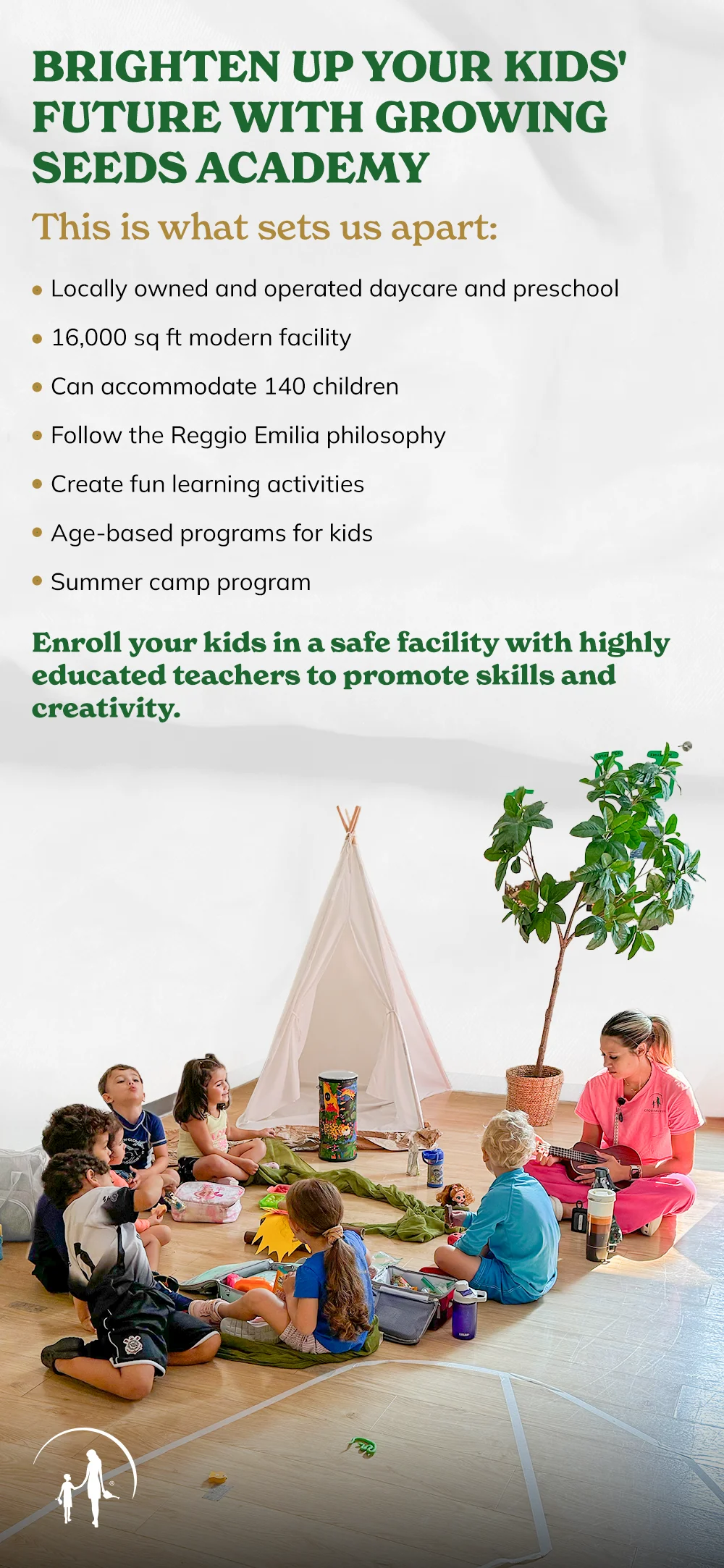
Growing Seeds Academy gives every child this early start. Our facility offers children safe places to learn and grow. We emphasize communication, empathy, teamwork, and confidence. Register your child with us now. See them grow into strong and friendly individuals.
Frequently Asked Questions
1. How do daycare centers support communication skills?
Children will learn to talk, listen, and use non-verbal cues in daycare. They practice conversations through peer interactions.
2. How does daycare help in emotional growth?
Daycare exposes children to different moods and feelings. They learn empathy by comforting friends and sharing toys.
3. How can parents support social development?
Parents can join community activities and use positive reinforcement. They should set limits on screen time, also.